How to Get Your Testosterone Tested (and What the Numbers Mean)
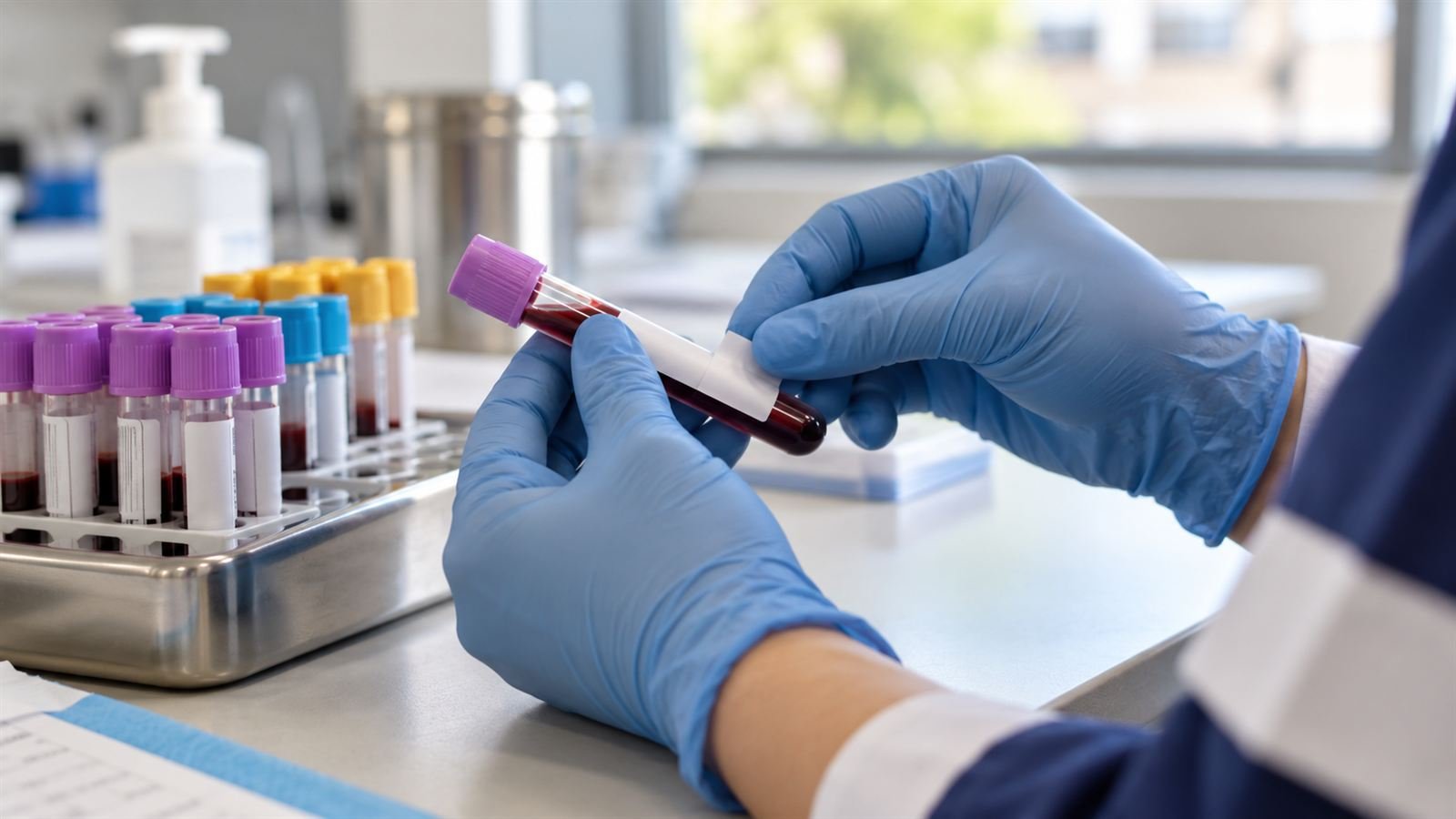
If you have read my pieces on symptoms and on whether boosters work, you already know the advice: test first. This is how that works in practice. I'm not a doctor, and this is not medical advice. Your own doctor decides which tests you need.
Why get tested before taking anything?
Because the symptoms are not specific. Tiredness, low drive and weight gain fit low testosterone, but they also fit poor sleep, stress, extra weight and some medications. Guidelines are clear that a diagnosis needs both symptoms and consistently low blood levels. A supplement can't tell you which one you have.
Which test do doctors order?
The first test is total testosterone. That is the amount of testosterone in the blood, including the part attached to proteins.
Sometimes a doctor adds more. The Endocrine Society guideline says that in men whose total testosterone is at or near the lower limit of normal, or who have conditions that change SHBG, clinicians should determine free testosterone, either measured directly or calculated from total testosterone, SHBG and albumin (Bhasin et al., 2018). SHBG is a protein that carries testosterone in the blood. Conditions that can change it include obesity, diabetes, older age, liver disease and some medications.
You don't need to order these yourself. It helps to know they exist, so you can ask.
When should the blood be drawn?
In the morning. Testosterone is not constant through the day. In a study of 66 men aged 30 to 80, levels in men aged 30 to 40 were 20% to 25% lower at 4 pm than at 8 am, and the gap narrowed to about 10% by age 70. Other hormones varied much less (Brambilla et al., 2009).
The guidelines follow from that. The American Urological Association calls for two early-morning tests on separate days (AUA, 2018). The Endocrine Society says to confirm a diagnosis by repeating a morning fasting total testosterone test.
In practice: book the earliest appointment, follow the lab's instructions on fasting, and never stop or change a prescribed medication on your own before the test.
How do I read the number?
First check the unit. In the US, results are usually in ng/dL. Many other countries use nmol/L. To convert, multiply nmol/L by about 28.8. For example, 10.4 nmol/L is about 300 ng/dL.
Then remember that there is no single universal cutoff. Here is where several well-known sources draw the line:
Two lessons. First, labs and groups differ, so your result is read against your lab's own range and your doctor's judgment. Second, one number on one day is not a diagnosis. The guidelines ask for results that are consistently low, along with symptoms.
What if the result is low, borderline or normal?
- Low once: repeat it on another morning before drawing conclusions.
- Consistently low, with symptoms: your doctor will look for causes and discuss options. That is medical care, not something to replace with a supplement.
- Borderline: your doctor may check free testosterone or SHBG, and look at sleep, weight and other conditions.
- Normal: your symptoms are still real. It means testosterone is probably not the explanation, so ask about sleep, stress, medications and other causes.
Are at-home testosterone tests reliable?
I could not find solid independent studies of the consumer kits themselves. There is a laboratory study that validated a dried blood spot method against venous blood and found a strong correlation (validation of a dried blood spot assay for testosterone), but that evaluates a lab method, not a kit you buy.
A single finger-prick test also doesn't follow the guideline: it isn't necessarily done in the morning, and it isn't repeated. If you use one, treat the result as a reason to talk to a doctor, not as a diagnosis.
What should I ask my doctor?
- Can we do a morning, fasting total testosterone test?
- If it is low or borderline, should we repeat it?
- Do I need free testosterone or SHBG measured?
- Could my medications, sleep, weight or another condition explain my symptoms?
- What else is worth checking?
Frequently asked questions
What time of day should I get my testosterone tested?
In the early morning. Testosterone is higher in the morning, and in men aged 30 to 40 it was 20% to 25% lower in the afternoon in one study. Guidelines call for early-morning samples.
Do I need to fast for a testosterone test?
The Endocrine Society guideline recommends a morning fasting total testosterone test to confirm a diagnosis. Follow the instructions of your lab and your doctor.
What is a normal testosterone level?
A large harmonized analysis of healthy, non-obese men aged 19 to 39 gave a reference range of about 264 to 916 ng/dL. Lab ranges differ, and the AUA uses 300 ng/dL as a cutoff for diagnosing low testosterone when symptoms are also present.
How do I convert ng/dL to nmol/L?
Divide ng/dL by about 28.8. For example, 300 ng/dL is about 10.4 nmol/L. To go the other way, multiply nmol/L by about 28.8.
Is one low result enough to diagnose low testosterone?
No. The AUA asks for two early-morning tests on separate days, and the Endocrine Society asks for a repeated morning fasting test. A single low value can be a one-off.
Sources
- Mulhall JP, et al. Evaluation and Management of Testosterone Deficiency: AUA Guideline. J Urol. 2018. doi:10.1016/j.juro.2018.03.115
- Bhasin S, et al. Testosterone therapy in men with hypogonadism: an Endocrine Society clinical practice guideline. J Clin Endocrinol Metab. 2018. PubMed 29562364
- Brambilla DJ, Matsumoto AM, Araujo AB, McKinlay JB. The effect of diurnal variation on clinical measurement of serum testosterone and other sex hormone levels in men. J Clin Endocrinol Metab. 2009;94(3):907-913. Semantic Scholar
- Travison TG, et al. Harmonized reference ranges for circulating testosterone levels in men of four cohort studies in the United States and Europe. J Clin Endocrinol Metab. 2017. Endocrine Society summary
- Wu FCW, et al. Identification of late-onset hypogonadism in middle-aged and elderly men. N Engl J Med. 2010;363:123-135. doi:10.1056/NEJMoa0911101
- Validation of a dried blood spot assay for testosterone measurement using liquid chromatography-tandem mass spectrometry. PMC11627179

Marcus Hale
Writer at The Male Ledger. Not a doctor.
I write about testosterone, energy and vitality after 40, and I link to the studies so you can check my work. Marcus Hale is a pen name; here is why.