Ashwagandha and Testosterone in Men: What One Good Trial Shows (and Doesn't)
Ashwagandha is in nearly every "men's vitality" formula. Companies love to quote one number from one study. I'd rather show you the whole picture. I'm not a doctor, and this is not medical advice. For the bigger context, start with my guide on whether testosterone boosters work.
What is ashwagandha?
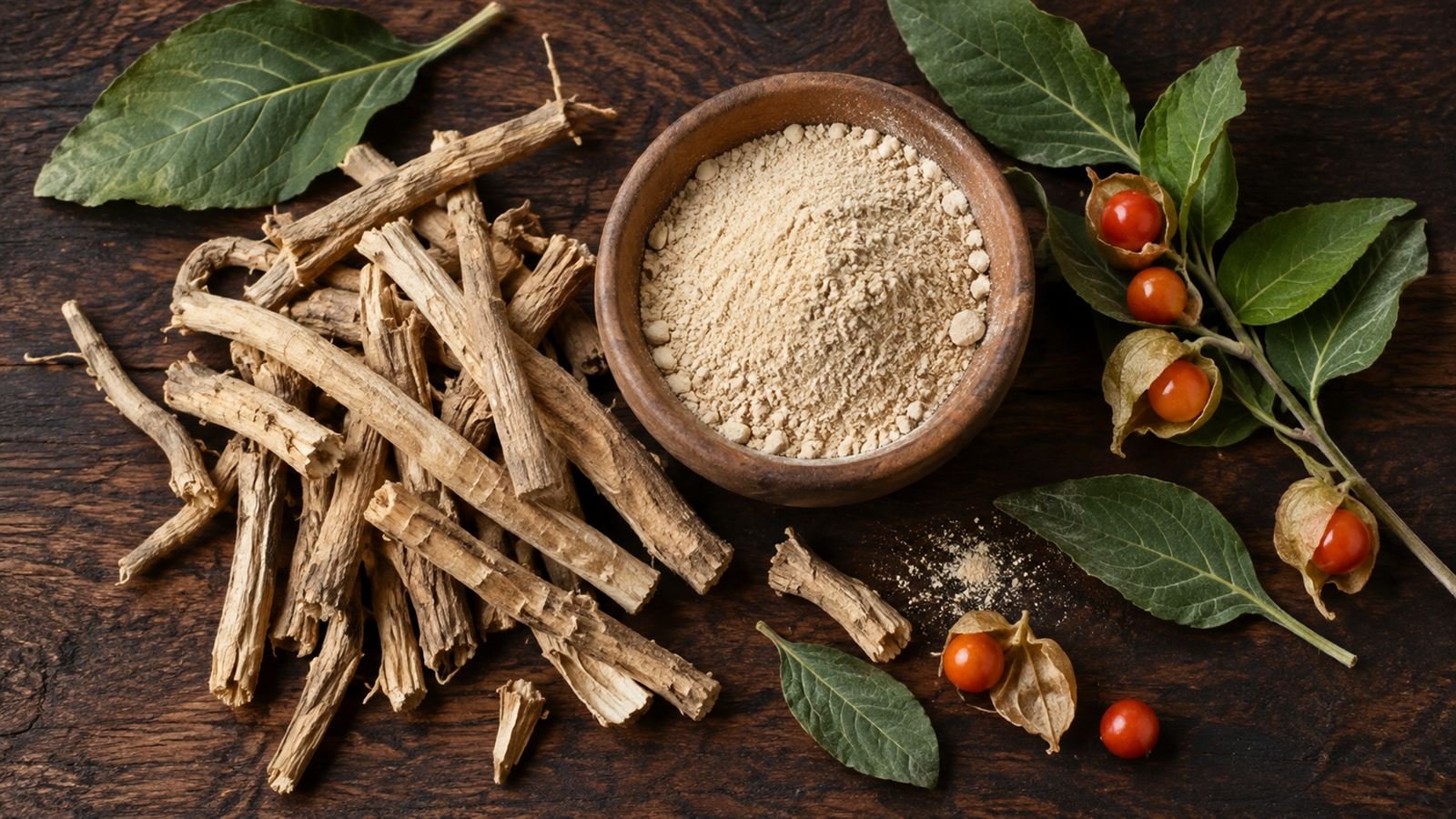
Ashwagandha (Withania somnifera) is an herb used for centuries in traditional Indian medicine. Supplements use the root, often as a standardized extract. It is usually sold as an "adaptogen", a term from marketing more than from medicine.
What did the trial actually test?
The study is a 2019 trial in the American Journal of Men's Health (Lopresti et al.). Here are the details that matter:
- Who: overweight men aged 40 to 70 with mild fatigue. 57 enrolled, 50 finished the first 8-week period and 43 finished the full 16 weeks.
- Design: randomized, double-blind, placebo-controlled, crossover. Men took ashwagandha and placebo in different periods, which helps cancel out differences between people.
- Dose: an extract delivering 21 mg of withanolide glycosides a day for 8 weeks.
What did it find?
- Testosterone rose 14.7% more than with placebo.
- DHEA-S, another hormone, rose 18% more than with placebo.
- No significant difference in cortisol or estradiol.
- Fatigue, vigor and sexual and psychological well-being improved over time, but not significantly more than on placebo.
The honest reading: a hormone number moved, but the men did not report a clearly better experience than the placebo group. That is why I would not call this "proof it works". It is a promising signal that needs bigger and longer studies.
What does "14.7%" mean for me?
It is a relative change compared with placebo, not a promise about your own level. Your starting point matters, and so does whether your level is actually low. If you haven't had a blood test, you don't know whether there is anything to fix. See the guide for how low testosterone is defined and diagnosed.
Is ashwagandha safe?
- Case reports of liver injury linked to ashwagandha have been published. If you have a liver condition, or you notice symptoms like yellowing skin or dark urine, stop and see a doctor.
- It may affect thyroid hormones. If you have a thyroid condition or take thyroid medication, ask your doctor first.
- It may interact with other medications. Ask your doctor or pharmacist before you start.
- The trial above lasted 8 weeks. We know much less about years of use.
I go through the liver reports and who should skip ashwagandha in my guide to testosterone booster side effects.
What should I check on an ashwagandha label?
- The extract and its standardization, such as the withanolide amount per serving, not just "ashwagandha blend".
- The milligrams per serving, so you can compare it with what studies used.
- The full supplement facts panel, a named manufacturer and third-party testing.
If a label hides the amount inside a "proprietary blend", see how to read a supplement label.
Frequently asked questions
Does ashwagandha increase testosterone?
In one 8-week placebo-controlled trial of overweight men aged 40 to 70, testosterone rose about 14.7% more than with placebo. It is a single small trial, so the evidence is early.
Will I feel more energy or vigor?
In that trial, men reported improvements over time, but the improvements were not significantly different from placebo. So the study does not show a clear benefit for how you feel.
How long did the study last?
Each treatment period lasted 8 weeks, and the full crossover lasted 16 weeks. Long-term effects are not known.
Who should avoid ashwagandha?
People with liver or thyroid conditions, and anyone taking prescription medication, should speak to a doctor before using it.
Sources
- Lopresti AL, Drummond PD, Smith SJ. A randomized, double-blind, placebo-controlled, crossover study examining the hormonal and vitality effects of ashwagandha (Withania somnifera) in aging, overweight males. Am J Mens Health. 2019;13(2). doi:10.1177/1557988319835985

Marcus Hale
Writer at The Male Ledger. Not a doctor.
I write about testosterone, energy and vitality after 40, and I link to the studies so you can check my work. Marcus Hale is a pen name; here is why.